
Our Properties
Fifty-one homes. Fifty-one families with a place to belong.
Portfolio Overview
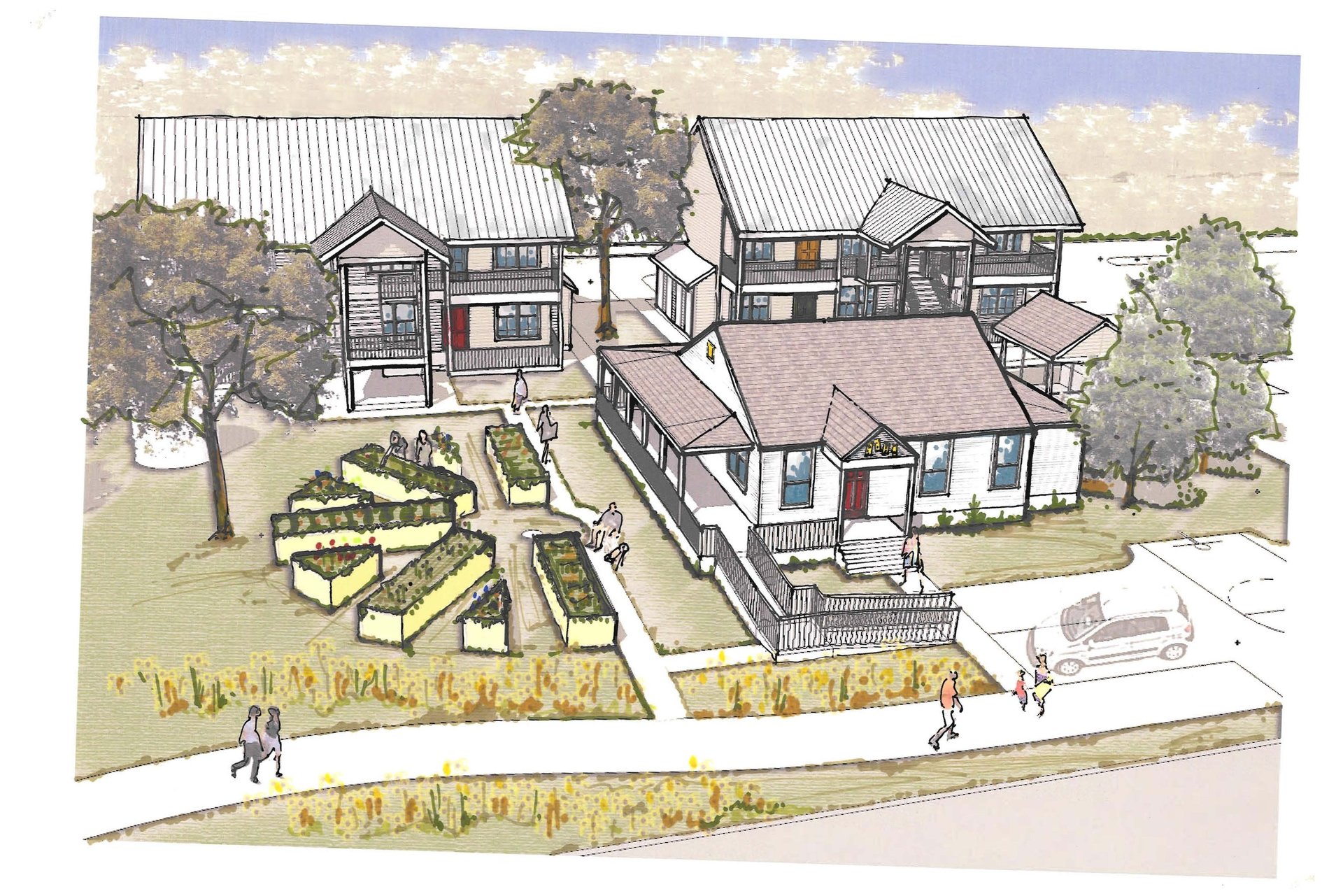
Blackland CDC owns and manages more than 51 units of affordable housing spread throughout the 28-block Blackland neighborhood in Central East Austin. Our portfolio was built over four decades through a combination of community organizing, HUD funding, private donations, and thousands of hours of volunteer labor. Each property reflects our commitment to keeping this neighborhood within reach: for the elderly, for people with disabilities, for families transitioning out of homelessness, and for working households who simply need a safe and stable place to call home.
Hardin House
The Hardin House was built in 1945 by Blackland neighbor June Brewer, who was born in 1925 and went on to make history.
In 1950, following the United States Supreme Court's landmark civil rights decision in Sweatt v. Painter, June H. Brewer became one of the first African American students admitted to the University of Texas at Austin. She enrolled for the second term of the summer semester alongside W.D. McClennan, Wilhelmina Perry, Mabel Langrum, Emma Harrison, Bessie Randall, and Horace Lincoln Heath.
Her daughter, June Brewer Hardin, later inherited the house and sold it to UT in 2004. The university donated it to BCDC, and in 2005 it was relocated to its current home on the corner of 22nd and Leona, where it still stands today. More than a house, it is a monument to the civil rights struggle and to the generations of progress that followed. Its history also reflects something larger: the evolving relationship between BCDC and the University of Texas, once adversaries, now partners in community preservation.
SNAP House
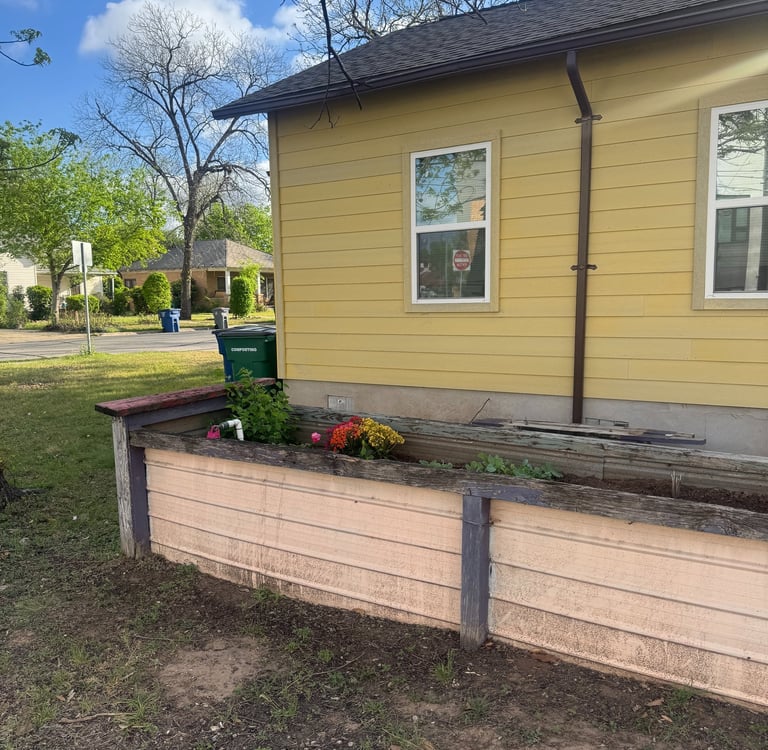
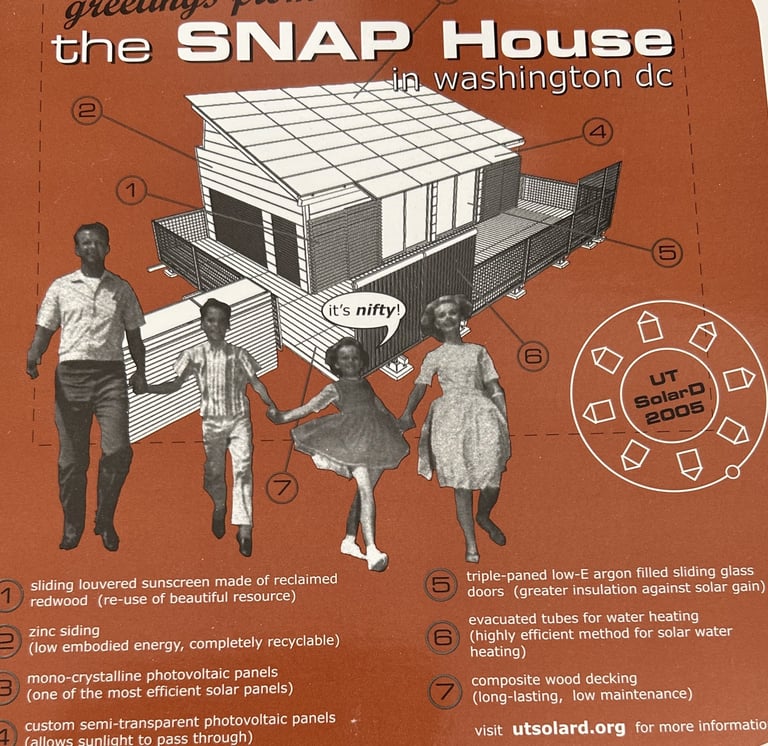
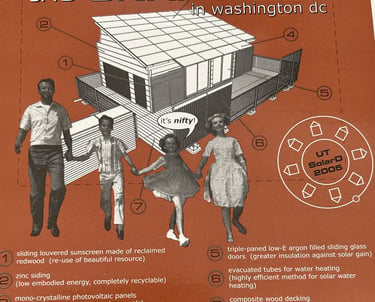
The Super Nifty and Portable House, better known as the SNAP House, came to Blackland CDC by way of Washington, D.C.
In 2005, architecture students at the University of Texas designed and built the house as their entry in the U.S. Department of Energy's Solar Decathlon, an international competition in which universities compete to design the most efficient and self-sufficient solar-powered home. After the competition, UT donated the house to BCDC, which paid to have it shipped back to Austin and installed less than a block from where its components were first assembled.
The design is as creative as its origin. Steel beams connect modular sections of the house, making the whole structure portable and reassemblable. Insulation is made from recycled styrofoam, and the home runs on solar power with efficient solar water heating. Most distinctively, the exterior cladding is made from zinc plates etched with pages from the Daily Texan. A close look at the siding reveals articles from 2005, making the building a one-of-a-kind time capsule embedded in the neighborhood's fabric.
The SNAP House is a private residence. Please respect the privacy of the current resident and do not approach the property without permission.
Rodin Village
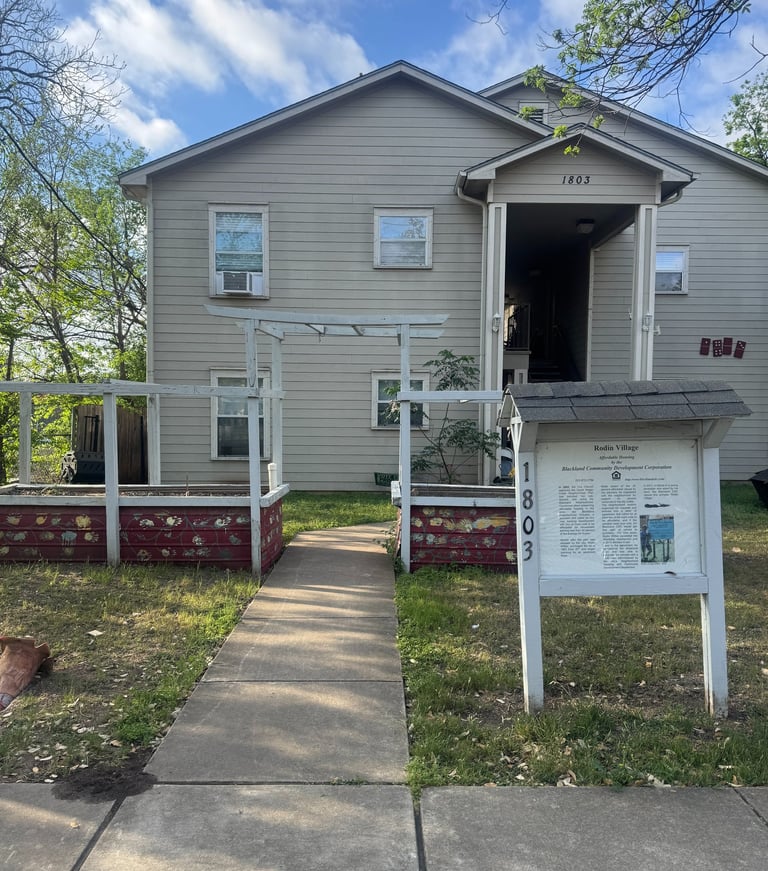
In 2002, the City Council approved the Upper Boggy Creek Neighborhood Plan, which divided the area into five sub-districts, one of them being the Blackland Neighborhood. With affordability already under pressure, the Blackland Neighborhood secured a provision requiring any new residential development of four or more units to be affordable for households earning less than 60 percent of Austin's area median income.
Shortly after, developer Rodin Wilber purchased the lot at 1803 East 20th Street with plans to build an apartment complex. When the city made him aware of the affordability provision, he came to the neighborhood to negotiate. In exchange for support on several code variances, he agreed in writing that at least two of the eight units would remain affordable and that if he ever sold the property, Blackland CDC would have the first right to purchase it.
For nine years, Wilber not only honored that agreement but exceeded it. When he decided to sell in 2010, he went straight to BCDC. The organization was able to purchase the complex through a HUD loan administered by the City's Neighborhood Housing and Community Development Department.
In 2011, in tribute to a developer who kept his word, Blackland CDC named the complex Rodin Village.
Robert Shaw Village
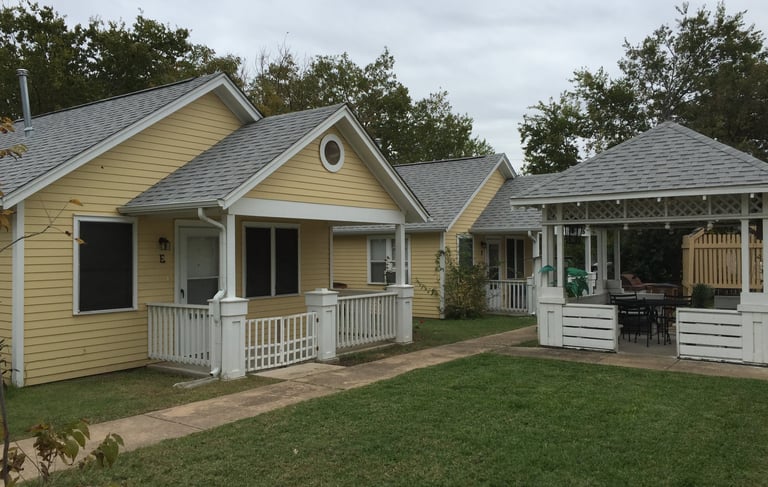
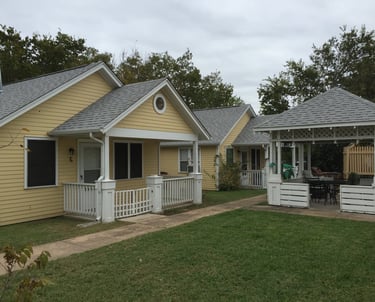
The Robert Shaw Echo Village is an 8-unit housing complex for elderly residents with very low incomes, and the first and only Tiny Planned Unit Development of its kind in Texas. The property is leased to BCDC by the City of Austin and named after Robert Shaw, the blues musician and neighborhood institution who ran the Stop and Swat Grocery store on this same stretch of East Austin for decades. Bertram Allen, BCDC's retired maintenance staffer and a local historian, remembers stopping by the store as a kid and watching Shaw step away from the register, sit down at his piano, and play.
To read the full story of Robert Shaw, visit his dedicated page.
Austin Art Village
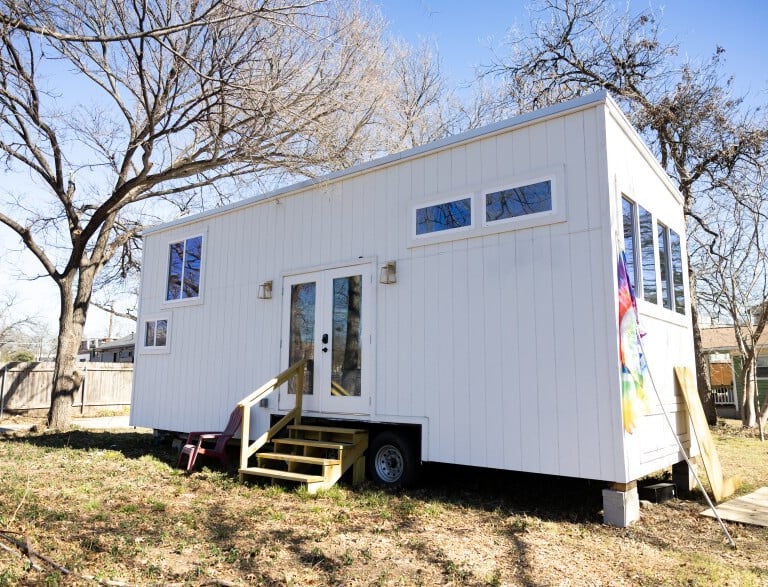
The Austin Art Village is BCDC's most ambitious development project to date, currently in the pre-development phase. The vision is a mixed-use creative community in the heart of East Austin that preserves affordable live-work space for artists while expanding the neighborhood's housing footprint.
The project builds on BCDC's decades-long commitment to celebrating the creative spirit as a core part of what makes the Blackland community thrive.

Know Someone Who Should Hear This Story?
Introduce us to funders, art advocates, or leaders who care about keeping Austin’s creative soul rooted here.




Building community and improving lives through quality affordable housing services in the Blackland neighborhood.
Leveraging Hope for good. The Dream Starts Here!
Location & Hours
Fannie Mae Stewart Conservatory
902 E 22nd St,
Austin, TX 78722
Weekdays: 9:00 AM – 4:00 PM
Contact Us
+1 (512) 220-8751
info@blacklandcdc.org
Maintenance: +1 (737) 296-0718 (Emergencies | M-F, 9 AM - 4 PM)
© 2026 Blackland Community Development Corporation. All rights reserved.